
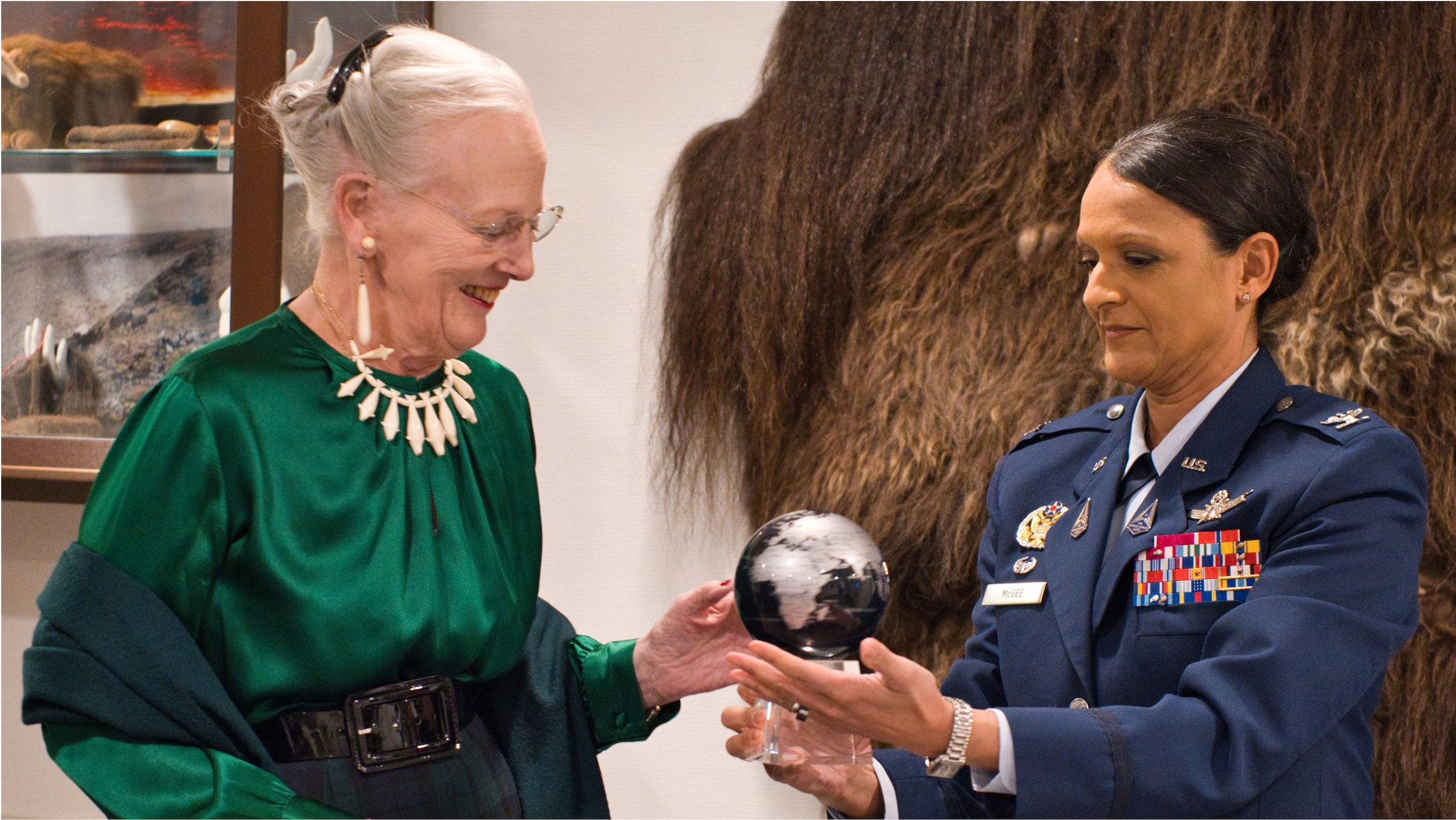
In September 2024, when Queen Margrethe II spooked the Danes for the second time in 365 days – the first one being the night of New Year’s Eve 2023, when she announced she would leave the throne to her son Frederik. This time, news outlets have let us know that the former Head of State was hospitalized after falling at Fredensborg Castle. Although she reports to be doing well, it is a reminder that one of Denmark’s longest-standing icons will not last forever. Queen Margrethe, also known as Daisy, is now 84 years old.
Understanding her role in the country’s history is one of those things that constitute Danishness, and although history cannot be condensed in 300 characters, we can give you a quick idea of why she is important to Danes.
Until 1953, Denmark had Salic law, which prohibited women from ascending to the throne. Then her father, Frederik IX, had three daughters. And so the Constitution was changed. Her life had been marked by change since the beginning: the Queen was born on April 16, 1940, just one week before the Nazis would occupy Denmark.
During her life, she has taken an interest in many things outside of royal matters. She is a big archaeology enthusiast and has participated in digs in Denmark, Italy, and Egypt. She is also a great artist and has become well known for her paintings, church textiles, and even her costume design for the Danish Royal Ballet and for the Danish film “The Wild Swans.” The most iconic of all her artistic creations is perhaps the illustrated Danish editions of “The Lord of the Rings,” which she did under the pseudonym Ingahild Grathmer. Other than Daisy, some have nicknamed her “Smoking Queen,” as until her official quitting in 2023, she was famously known for her abundant smoking.
In terms of her role as a monarch, during her time as a queen, she managed to modernize Danish royalty quite a bit. In 2009, she fully modernized the inheritance system and introduced absolute primogeniture, which allows the eldest child – regardless of gender – to inherit the throne. In 2022, she removed the Danish royal titles from all of her grandchildren who are not descendants of the now King Frederik X. In a full Danish-style egalitarian move, she announced the decision had been made so they could “shape their own existence” independently of their belonging to a royal family.