

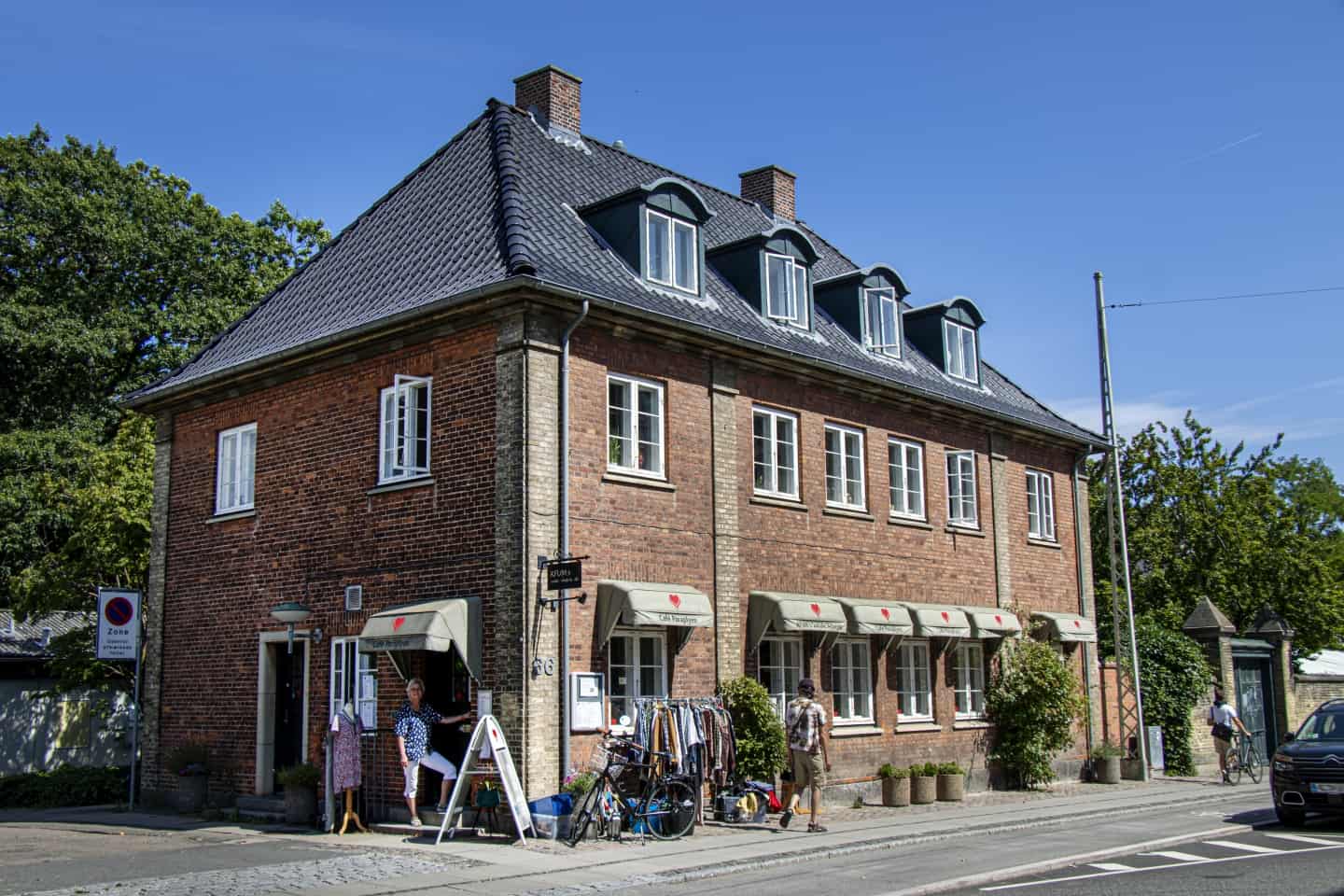
When you turn down Nyelandsvej in Frederiksberg and walk into Café Paraplyen, you immediately feel a sense of comfort. Red-and-white checkered tablecloths cover the tables, a well-used piano sits in the corner, and warm smiles greet you from staff members and volunteers. Guests arrive with newspapers tucked under their arms and they make themselves at home, settling in for an unhurried meal. Many see the café as an extension of their own living room.
The food is equally wholesome. Café Paraplyen serves traditional Danish fare — simple, hearty dishes many guests recognize from their own kitchens and childhoods. In December, that might mean classic hot dishes, with stegt flæsk a particular favorite, alongside seasonal staples.
But Café Paraplyen is more than just a place to eat. It is a place to be; a place to belong.
A House Built on Community
I first came across Café Paraplyen through frivilligjob.dk, Denmark’s national volunteering platform. The site itself says something important about Danish society: volunteering here is organized, visible, and treated as a regular part of civic life. Denmark is often recognized for its strong welfare state, but beneath the policies and systems lies something quieter and equally essential — a deeply rooted culture of shared responsibility and giving back.
Café Paraplyen’s doors have been open since September 1995. For nearly three decades, the café has stood by a core belief: that a community must accommodate everyone, especially those in vulnerable situations. Over the years, it has developed a culture shaped by compassion and presence. The café operates as part of YMCA Social Work (KFUM’s Sociale Arbejde), guided by a principle often used to describe its approach:
“The hands are active, and the heart is warm.”
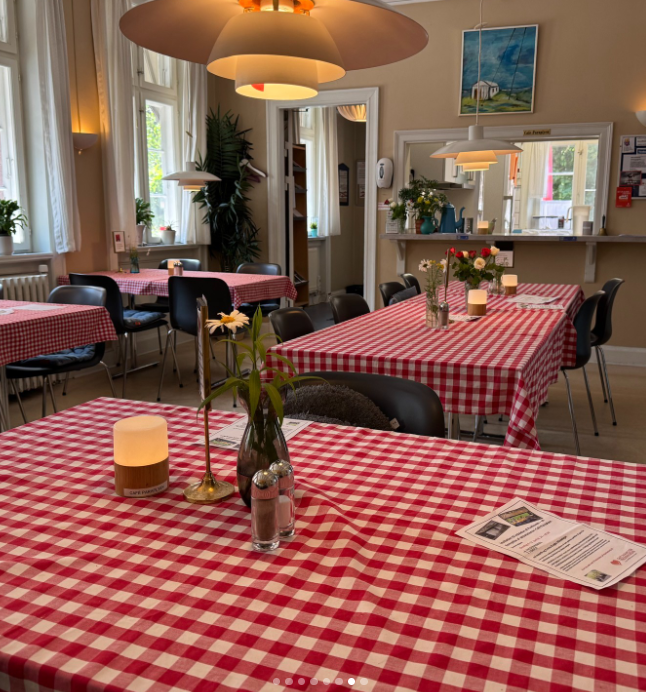
Image credit: Frederiksberg Fonden
Loneliness: A Global Challenge, Met Locally
Loneliness is often framed as an individual issue. It can be seen as something to be handled privately, even a social taboo. Yet growing evidence suggests it is both structural and societal.
According to a recent World Health Organization report on social connection, social isolation is estimated to affect up to one in three older adults and one in four adolescents worldwide. It particularly affects marginalized, groups such as migrants, refugees, people with disabilities, LGBTQ+ individuals, and ethnic minorities, who face additional barriers to social connection. In this context, places that foster authentic, everyday connections aren’t optional extras; they are essential.
Café Paraplyen describes itself as a social café. It is an alcohol- and drug-free space where anyone can buy a daily meal — and where those who cannot afford it are still welcome. The café serves a wide range of guests. These include pensioners and people on transfer income; individuals living with mental health challenges; people struggling with substance use; those with little or no connection to the labor market; and many who are simply lonely or seeking connection. Everyone, regardless of background, can find a seat at the table.
As Nanna Kure, Weekend Coordinator and Assistant, explains, showing up consistently is key to building trust and connection:
“Just feeding someone is quite a big act of nurturing. Especially for people who are lonely or don’t have a lot of money, there is a sense of community around a shared meal.”
She adds: “It’s sometimes hard to find somewhere where you can just exist and not spend a lot of money to be there and socialize.” The café is open almost every day and for many guests — particularly those in vulnerable situations — the predictability and familiarity of the space provides comfort and stability.

Image credit: Valentina Shapovalova
Helping Versus Serving
One of the most meaningful lessons from my Jesuit education was learning to distinguish between helping and serving. Helping can unintentionally imply hierarchy. Serving begins from equality — from presence, humility, and respect.
That distinction is embedded at Café Paraplyen from the very beginning. Even during volunteer orientation, language matters. People who come to the café are called guests. Privacy is carefully protected. Volunteers are there to provide a safe space — not to fix, instruct, or judge. Their role is both practical and relational: to create an environment where people feel seen, respected, and welcome.
With only four staff members, volunteers play a central role in making this possible. Nanna shares: “The volunteers are everything, really. They are the ones greeting the guests, checking in with them, and noticing what they like. They make people feel seen. They don’t just come in, do a few hours of work, and leave — they really care about the guests.”
One volunteer, Gitte Olsgaard, who also works as a Redaktør (Editor) at DR, describes her experience this way: “I totally love it. In my everyday work, I see the world falling apart, and after many years as a reporter and editor, I have become a little cynical. Volunteering is the exact opposite: it is meaningful in every sense. We are doing good for the guests. We see them as humans with dignity and worth. Everybody needs that. And for me personally, it makes so much sense. It is meaningful. So I’m there for the guests. But actually, I’m mostly there for myself!”
Her words capture something essential about volunteering at Café Paraplyen: it is a two-way street where everyone benefits from a welcoming space and community.
A Safe Space Within a Wider System
Café Paraplyen cannot replace Denmark’s formal support systems. As Nanna explains: “We only know what the guests choose to share with us. What we are is an informal support system.” The café does not provide medical treatment or financial assistance. Instead, it acts as a preventive and supportive space — a place where people can find a sense of calm, build relationships, and be gently encouraged to seek further help if they choose. Support is offered, not imposed.
Its purpose isn’t to solve every problem, but to ensure that no one faces them alone. This reflects a broader Danish approach: strong public systems strengthened by civil society, ensuring people aren’t reduced to cases or categories, but treated as whole human beings.
Why This Matters
Loneliness and social isolation are not marginal issues. They are widespread challenges with serious consequences for health and well-being. Café Paraplyen shows how these challenges can be met — through presence, continuity, and community. Not through grand gestures, but through small acts that accumulate: a shared conversation over strong coffee and homemade cake; a piano played on a Wednesday afternoon; a group excursion to a nearby museum; traditional Danish comfort food; being welcomed as a guest.
Volunteering here is not about rescuing others. It is about standing alongside them — and, in doing so, strengthening the social fabric that connects us all.
Find out more about Café Paraplyen and how you can volunteer here.