
Every four winters, when the light grows thin and the air sharpens, locals gather to vote in the Regional and Municipal elections. Not just native Danes but those of us who came and stayed.
I remember my first time in 2021. I stood excited with my husband in a queue outside our neighborhood school, surrounded by young parents rocking strollers and elders nodding to each other in greeting. Everyone looked so sure of themselves. I wasn’t. I knew little of the parties, the names, the choices. Still, I thought my voting mattered.
I walked inside. Here, in every hand, there was a long paper – the polling card. Simple and ordinary.
Aside from the small surprises, I learned that this is what democracy looks like in Denmark. Here we have the power to influence the rhythms of our daily life. This right does not only belong to citizens with Danish passports, but also to long-term residents like me, and you too. Even if you can’t vote right now, you will have the right to soon.
And we internationals don’t have to wait till residency/ citizenship. On 18th November this year, the regional and municipal elections will take place across Denmark, where you can as a non-EU resident (lived in DK for 4 or more years) and EU resident, including Icelandic, Norwegian or UK.
How It All Began
After casting my vote, I felt an urge to find out how I had earned this right. I discovered that my inclusion as a non-Dane was no accident. Giving non-citizens a voice in local government took root in the late 20th century. First, Nordic neighbors gained municipal voting rights in the late 1970s. By 1981, Denmark extended that right to all foreign residents who had lived in the country for at least four years.
The thinking was simple: if you pay taxes, reliably use local services, perhaps send your kids to school here, you should have a say in how all this is run. Everyday participation equals representation.
Who Gets to Vote Today?
Some internationals still think you can’t vote if you’re not a Danish citizen, but you can. If you’re over 18 and a resident in Denmark, you can vote in municipal and regional elections if you are:
- An EU, Icelandic, Norwegian or UK citizen
- Or a non-EU resident who has lived in Denmark for four years or more.
Registering: No Extra Steps
In Denmark, voter registration is automatic. Once you’re registered with the Civil Registration System (CPR) at your address, you’re on the electoral roll. Days before the election, I received a voter card by mail informing me when and where to vote. That card is the ticket to the ballot box, so don’t forget to bring it along to the voting booth. The only responsibility you have is keeping your address updated because it determines your voting district.
If in doubt about your registration or you haven’t received your poll card about five days before election day or it’s wrong, contact your Citizen Service (borgerservice) or municipality (kommune).
Local? Regional? What’s the difference?
As I went down the rabbit hole, I discovered that the place we live is not just guided by one council. There are multiple councils involved. Denmark is divided into 98 municipalities (kommuner), each governed by an elected council. Each Municipality has a local council. Depending on the size of the Municipality, a council can have 9 to 31 members. This council makes decisions about housing, buses, schools, and the trash that gets collected outside our door (or in our backyards).
The Mayor leads the council.
What do Local Councils Do?
Municipalities (kommuner) are the backbone of Danish democracy, managing schools, childcare, and elder care, Local roads, buses, bike paths, libraries, and sports, among others.
If you have noticed your street has new bike lanes or a new after-school club at your child’s school, it’s all because of the decisions made by your municipal council.

What about the Regions?
Above the municipalities sit Denmark’s five regions, namely, the Capital Region of Denmark, Region Zealand, Region of Southern Denmark, Central Denmark Region, and North Denmark Region. They’re less visible but control one of the most critical areas: healthcare. In 2025 one will vote for a new 47-member council of Region Østdanmark (East Denmark), because Capital Region + Region Zealand are being merged. The new region takes effect 1 January 2027 (2026 is a transition year), leaving four regions from 2027.
Regional councils oversee hospitals, specialist treatments, and general practitioners. They also coordinate regional transport. If your nearest hospital expands its emergency unit, it is the result of a regional council vote.
What happens at the Polling Station
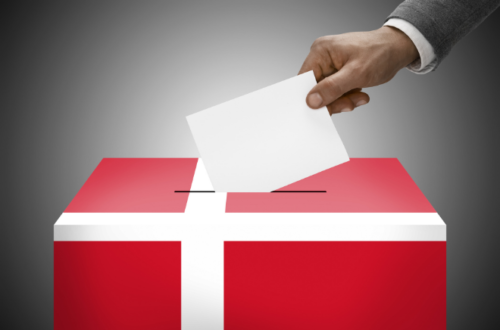
At the polling station, you will hand over your polling card and ID and receive 2 ballot papers, one for municipal and one for regional (you can return one unused or cast a blank). You will be directed to an individual booth. You can still vote without the poll card (e.g., if you forgot it). You’ll be asked for your date of birth and, only if there is doubt about identity, you may be asked to show ID. Inside the booth, you mark either a party or a candidate. You fold the ballot paper, drop it into the box outside, and et voilà! By evening, votes are counted, and results stream across the news as you eat dinner.
Why Local Elections Matter
National politics may dominate headlines, but local elections touch everyday life in quiet, direct ways. They influence the state of our parks, the budget for schools and how quickly you can see your doctor.
As internationals living in Denmark, these elections are more than symbolic. They are a practical way to influence the very community we are building a life in.
That is why, on 18th November, you, my dear international, need to show up and stand shoulder to shoulder, at the polling station, with a crowd of Danes. Make it count! It is democracy lived at the grassroots level, where your voice counts, and where voting shapes the everyday fabric of our lives.