
If you’re an international professional in Denmark, you’re likely familiar with the struggles that persist beyond initially learning the language and navigating bureaucracy. There are the unspoken challenges of integrating into a new culture, finding belonging and being recognized as a professional in a new environment.
These challenges are not just anecdotal. A study from the Danish Institute for Human Rights found that 84% of people with minority ethnic backgrounds in Denmark report experiencing discrimination, while many say it affects their everyday lives and career opportunities.
Labour market data also shows structural gaps: immigrants from non-Western countries have an employment rate roughly 22% lower than ethnic Danes, despite improvements over the past decade.
Surveys also show that ethnic minorities from regions such as Sub-Saharan Africa or the Middle East report the highest likelihood of experiencing discrimination in Denmark, with probabilities exceeding 70% in some studies.
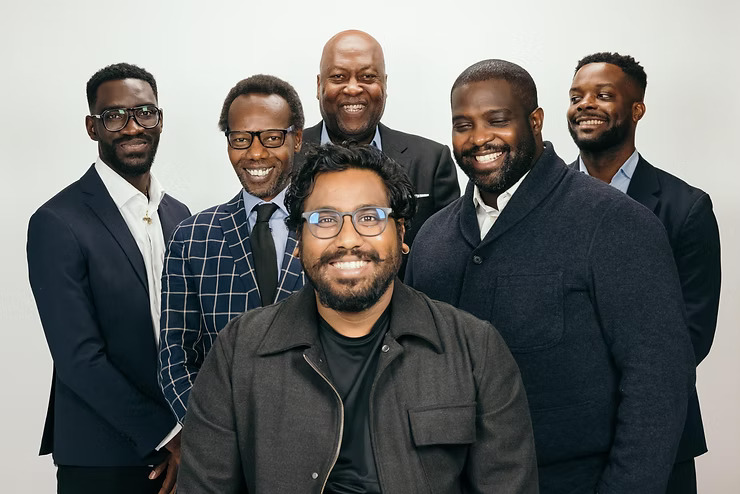
That’s where the Brotherhood for Professionals of Color (BPoC) comes in. Founded in 2023, the organization has quickly grown into a network dedicated to mentorship, professional development and community for men of color working across Denmark. I actually volunteered with BPoC for a few months earlier this year, helping out with social media visuals, copywriting and videography at their events. This experience gave me an inside view of how this organization works, and why it matters to so many internationals of color in Denmark.
Why BPoC exists
Denmark is often praised as one of the most equal societies in the world, and in many ways, that’s true. But for internationals of color, there can still be barriers: being overlooked in recruitment processes, missing out on mentorship opportunities or simply not seeing yourself reflected in leadership roles. BPoC was born exactly from that. The organisation provides a space beyond networking for jobs, and a platform where you can share experiences, challenge stereotypes and find new friends.
To understand why BPoC exists, you have to look at the reality of moving here. Joseph Yamoah, the organization’s Founder & President, knows the emotional challenge intimately. Moving to Denmark ten years ago was “the most difficult decision of my life,” he recalls. He describes that early period as a mix of feeling “alone, cold, scary,” but also “humbling.”
“I wish there had been a group like BPoC at that time,” Yamoah says.
It was the culmination of these personal experiences, from student life through unemployment to parenthood, that sparked the idea. Yamoah admits he sometimes jokes that he started BPoC just to make friends, but the intent was always much deeper. He wanted to build a safe space for professional growth where members didn’t just feel like they fit in, but where they actually belong.
It’s a mission that no one person could carry out alone. Yamoah emphasizes that the organization’s rapid growth is due to a collective effort from board members, volunteers and allies like PROWOC (Professional Women of Colour Denmark), BPoC’s sister organisation that is Denmark’s professional network for women of color.
“Our members, like Andrew, Kevin, Stephen, Pratik, and many others…all the former and current board members, volunteers, allies, partners and our sisters at PROWOC have been incredibly supportive,” says Yamoah.
The challenges behind the mission
BPoC’s mission is simple but ambitious:
Mentorship – pairing young professionals with experienced leaders who can guide them through Denmark’s professional landscape.
Empowerment – empowering individuals and communities to be agents of change in their own lives and society.
Belonging – creating an inclusive environment where diversity is celebrated, and everyone’s voice is valued.
As Yamoah puts it, “professionals of color in Denmark often face a complex mix of visible and invisible barriers…from limited representation in leadership, to biases that influence hiring and workplace dynamics.”
The biggest challenge he highlights is one that too many internationals can relate to:
“A lack of accessible mentorship adapted to the experiences of people of color. Having a coach or mentor can help tremendously, especially in a new country.”
That’s exactly why BPoC exists: to fill the gap that so many have felt but never had a place to address.
This mission also extends to challenging deep-seated norms. Richard Walakira, a political activist and Obama Leader who spoke at BPoC’s recent event on “Redefining Masculinity,” was struck by the organization’s inclusive approach.
“The conversation invited multiple pathways and perspectives, and importantly, it wasn’t limited to men alone,” Richard notes. “This inclusive approach creates an atmosphere where men feel seen, heard and held. It sets the conditions for conversations to move forward with honesty and courage.”
Growing a Brotherhood in Denmark
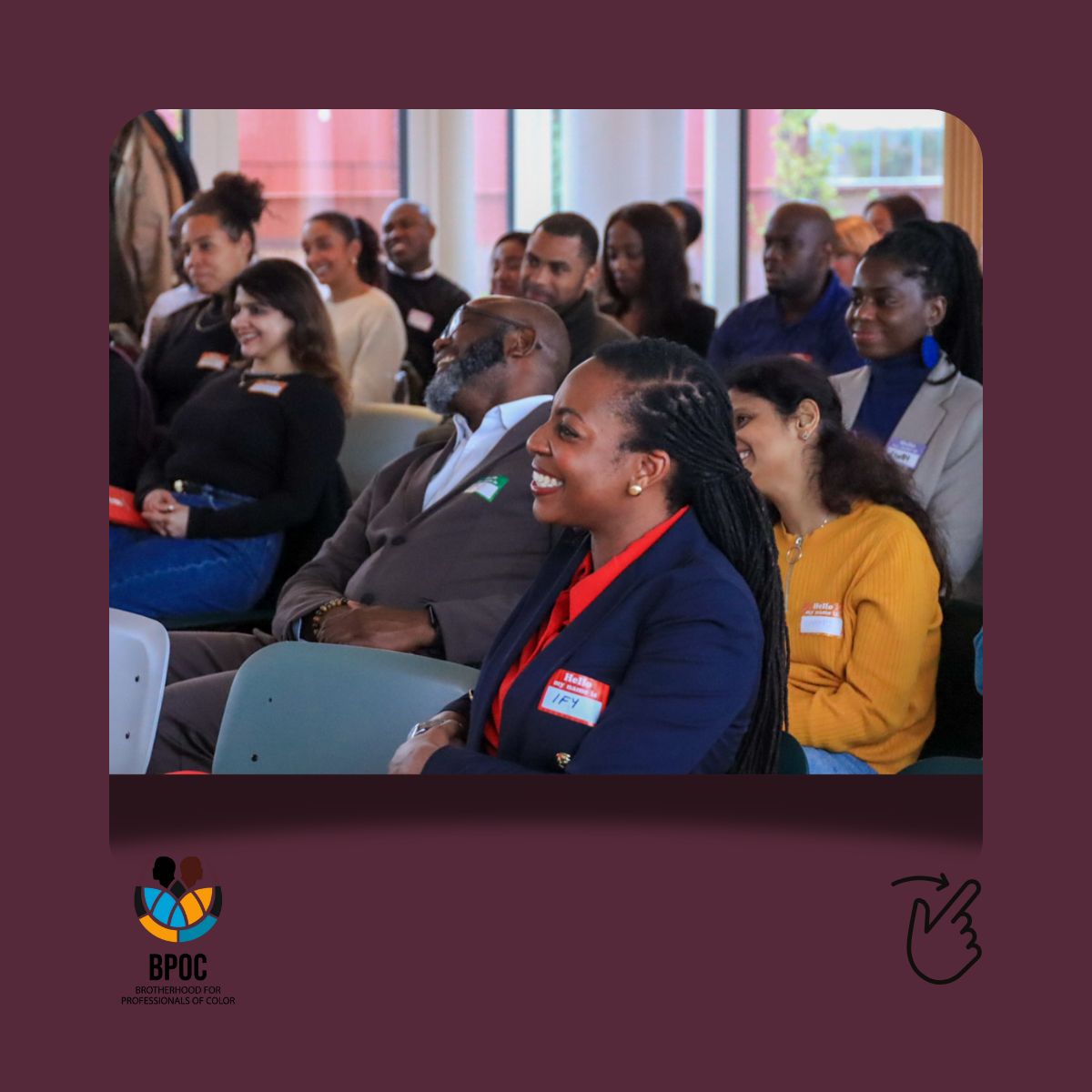
In just two years, BPoC has gone from an idea to a community of over 200 members, with events ranging from career workshops to panel discussions on diversity in leadership.
“This expansion is intentional and relies heavily on active advocacy,” says Stephen Burrell, BPoC’s Vice President who oversees event programs. He views this personal outreach as the engine of the community.
“For me, spreading the word about BPoC is how we drive membership and engage the one-time participants,”Burrell explains. “Whether it is for community, culture or career opportunities, the goal is to ensure that whenever someone is looking for connection, they know the door is open.”
When I ask Joseph Yamoah to pick just one success story that stands out, he hesitates. It’s not because there aren’t any, he says, but because there are too many.
“If I start on this, I don’t think we will have enough ink to write this down,” he jokes.
As we dig deeper, however, specific examples surface. He points to a member who visited DFDS during a company visit, felt inspired by the environment and later successfully applied for a role there. That isn’t an isolated case: following last year’s career event for jobseekers, Yamoah notes that more than 75% of participants secured positions in various fields.
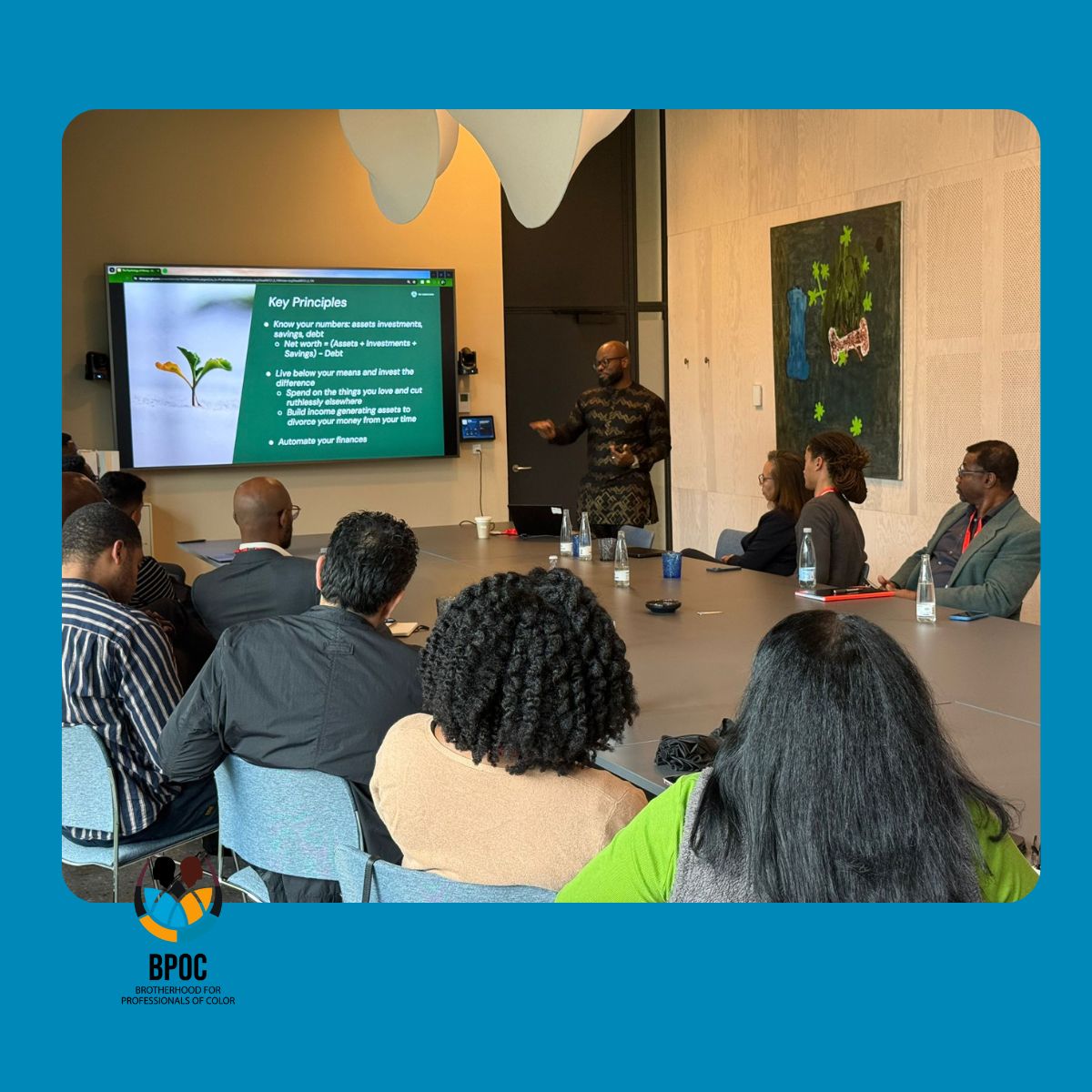
But often, the breakthroughs are internal. He recalls a workshop on imposter syndrome where a participant finally found the language to describe his struggles, walking away with tools he didn’t know he needed. It is this emotional resonance that seems to matter most. At nearly every meeting someone approaches him just to say they finally feel at home, able to “show up as themselves and be among brothers.”
Why it matters for internationals
For internationals, particularly men of color, the professional journey in Denmark can often feel isolating, regardless of qualification levels. BPoC serves as a vital counterweight to this, offering a support system that highlights the diverse talent already present in the workforce.
In fact, the organization aligns perfectly with the Danish tradition of associational life (foreningsliv). As Richard Walakira points out, “BPoC fits naturally into Denmark’s social fabric, which is deeply rooted in unions and community-based structures.”
“What makes BPoC unique is its ability to unite male professionals of color and offer them a collective voice,” Richard explains. By doing so, the organization is able to address gaps and challenges “that are often left unspoken in mainstream professional environments.”
Ultimately, the community helps reduce the sense of isolation many internationals experience when building a life abroad. By creating a space where members can speak openly about shared challenges, Yamoah says the network often begins to feel more like a family. Through meetups, workshops, cultural events and mentorship, BPoC is creating a support system for professionals of color in Denmark, one where members can find guidance, friendship and a sense that they don’t have to navigate their careers alone.
Looking ahead
Although BPoC is still a relatively young organization, its ambitions are broad. Yamoah envisions the community evolving beyond networking alone, with a stronger focus on members actively supporting one another. That includes opening conversations around topics that are often overlooked among men, such as mental health and physical health issues like prostate cancer, depression and high blood pressure.
The broader goal is to reshape the national narrative around diversity to prove that “Denmark is a place for everyone,” a mission that includes expanding operations nationwide to reach professionals outside the capital region.
However, the initiative closest at heart remains the mentorship program. The priority is to support the younger generation by providing them with visible examples they can look up to. Ultimately, the door is open to all. Yamoah emphasizes that anyone sharing this vision is welcome to join, whether as a mentor or simply as an ally lending their voice to the cause.
Why BPoC matters, now more than ever
In a society where internationals of color often still navigate Denmark feeling like outsiders, BPoC is redefining what community can look like. It is much more than just career advancement, though many members gain that too. It’s about identity, confidence, friendship and belonging. It’s about challenging stereotypes by creating visibility. It’s about building a network where men of color can come together, grow together and succeed together. And most of all, it’s about making sure no one feels alone in a journey that can otherwise feel overwhelmingly isolating.
In a country where many internationals of color still describe feeling like outsiders, BPoC is attempting to reshape what a professional community can look like. While career opportunities are part of the network’s appeal, members often speak just as much about the sense of recognition and belonging they find there.
It’s about identity, confidence, friendship and belonging. It’s about challenging stereotypes by creating visibility. It’s about building a network where men of color can come together, grow together and succeed together. And most of all, it’s about making sure no one feels alone in a journey that can otherwise feel overwhelmingly isolating.
It creates what Richard calls “a safe and brave space where a wide range of lived experiences can be shared,” grounded in trust and mutual support that extends far beyond individual gatherings.
BPoC is proving something powerful: sometimes, all it takes is a community to turn a new country into a home.