

Starting a new life in Denmark comes with exciting opportunities and a lot of new rules to learn, especially around taxes and public benefits. Whether you’re a student, a professional, or moving with your family, understanding how to lower your taxes and access available support can make a big difference.
This guide breaks down the key deductions, financial aids, and important updates for international residents in 2025, including expert advice from tax specialist Madalina Henter and Anca Monica Mocanu, founder of Contab Group.
Tax Deductions
Denmark offers several deductions that can significantly reduce taxable income and are not common to all countries. Ensure you know what you’re entitled to as a Danish resident.
Commuting Deduction
You can deduct travel expenses if you travel more than 24 kilometers daily (round-trip) for work. In 2025, the standard deduction rate is DKK 2.23 per kilometer up to 120 km and DKK 1.12 beyond that, with slightly higher rates for very remote areas.
Union Dues and Unemployment Insurance
Union dues and unemployment insurance contributions are also deductible. Union membership fees are deductible up to DKK 7,000 annually in 2025, while A-kasse (unemployment insurance) fees are fully deductible without a cap.
Work-Related Training Expenses
Work-related training expenses may be deductible if they are directly tied to maintaining or improving skills in your current job. However, tuition fees for degrees that qualify you for a new profession are generally not deductible.
Home Maintenance Deduction (Boligjobordning)
Denmark’s home maintenance deduction, known as Boligjobordning, is a tax scheme that allows individuals to deduct costs for certain home-related services. Under this scheme, you can get up to DKK 12,400 per person per year in deductions for approved services such as cleaning, minor repairs, and gardening.
There’s also Servicefradrag under this scheme, which is a specific deduction focused on everyday home services like cleaning and childminding.
Curious about how it works in detail? Check out our full article on Servicefradrag here.
Social Welfare and Public Financial Support
International residents who meet the necessary residency and work criteria can access a wide range of welfare benefits in Denmark.
SU (Statens Uddannelsesstøtte)
Students enrolled in Danish universities can receive the SU (Statens Uddannelsesstøtte) grant for living expenses, which amounts to around DKK 6,589 per month in 2025 for those living independently. EU/EEA citizens have to be working as part-timers alongside their studies to receive SU. Non-EU citizens must normally hold a permanent residence permit or meet specific conditions related to family ties or refugee status to access the SU. Also, University tuition fees are free for EU students.
Unemployment Benefits
Denmark’s unemployment benefits system provides substantial support. To qualify, you must have been a member of an unemployment insurance fund (A-kasse) for at least one year and meet an income requirement of DKK 273,504 over the past three years, with a monthly cap of DKK 22,792.
Benefits amount to 90% of your previous salary, up to DKK 21,092 per month in 2025. For the first three months, this can increase to DKK 25,070 if you’ve had four years of continuous A-kasse membership and meet additional income or employment criteria.
Graduates from Danish universities are eligible for unemployment benefits for up to 1,924 hours within two years. Benefit rates for graduates vary:
- With dependent children: DKK 17,295/month.
- Without children:
- Under 30: DKK 15,081/month for the first 3 months, then DKK 10,371/month.
- 30 and over: DKK 15,081/month for the first 3 months, then DKK 13,100/month.
To receive benefits, you must register as unemployed on Jobnet.dk from your first day of unemployment, maintain an active CV, and actively seek employment.
Housing support (Boligstøtte)
Housing support (Boligstøtte) is available to renters with lower incomes. Both Danish and international residents with CPR numbers can apply once they move into eligible housing. The amount depends on rent, income, and family situation. Students often benefit from this to help cover high living costs.
Family Support Benefits
Family support benefits include the Child and Youth Allowance (Børne- og Ungeydelse), providing quarterly payments for children aged 0–17. New arrivals from non-EU countries build up their entitlement gradually over six years, while EU citizens working in Denmark now qualify for the full amount immediately due to EU rules. Parental leave benefits are also available for international employees who have contributed to the labor market, offering up to 48–52 weeks of leave with compensation based on previous income.
Social Assistance (kontanthjælp) and Integration Benefit
Social assistance (kontanthjælp) is available only to residents with no other means of support who meet strict criteria. To qualify for full benefits, you” generally must have lived in Denmark (or the EU) for at least 9 out of the last 10 years and meet minimum employment requirements. Those who do not meet these conditions, including most newly arrived internationals, may only access the reduced integration benefit (selvforsørgelses- og hjemrejseydelse), which is significantly lower. Non-EU citizens on temporary visas should be cautious about applying for these benefits: receiving public assistance like kontanthjælp or the integration benefit can risk their residence permits under Danish immigration rules.
For further information about kontanthjælp, read our article.
Danish Language Course
Free Danish language courses are also available for most international residents, requiring only a small refundable deposit. Municipalities offer additional integration support, helping newcomers settle in and navigate the Danish system more smoothly.
Tax Strategies for Private Individuals
We spoke to Madalina Henter, a legal consultant specializing in tax law and immigration. With nearly 14 years of experience in Denmark, Madalina primarily assists international clients in navigating the complexities of the Danish system.
Madalina is originally from Romania, where she completed her law degree. She holds a Master’s in Law from Copenhagen University, where she specialized in tax law. After working with international newcomers in Odense Municipality, she founded her consultancy focused on assisting internationals with tax and immigration matters. Today, Madalina mainly works online, helping clients across Denmark and internationally. She spoke to Last Week in Denmark about the key advice internationals should know when it comes to taxes.
Key deductions you may be unaware of
- If your commute to work is more than 12 kilometers, you are eligible to claim deductions for your travel costs.
- Contributions to labor unions and unemployment insurance funds are tax-deductible
- Students from certain countries may also be eligible for additional deductions on their work income. It is crucial to check whether your home country is listed among those eligible for special student deductions.
- For highly paid employees and researchers earning over 78,000 DKK per month, there is a special tax scheme allowing you to pay around 27% in taxes instead of the usual 45%, provided certain conditions are met.
-
- If you own property abroad and are paying off a mortgage, you may be entitled to deductions in Denmark. However, it is crucial to properly declare all income and property from other countries, even if you are already taxed in that country.
- It’s crucial to always use the Danish version of government websites and translate them. The English versions are often incomplete.
Public Financial Support for Internationals
Madalina points out that public financial support for internationals exists but is subject to many conditions. For example, SU (Student Support) is available primarily for EU students. However, non-EU nationals usually do not qualify immediately unless they have lived and worked in Denmark for a few years under specific agreements.
Similarly, unemployment benefits through A-kasse are generally inaccessible for non-EU internationals unless they have fulfilled a residency and employment requirement.
“It’s important not to pay for A-kasse unless you are sure you qualify, because otherwise, you cannot benefit from it when needed,” Madalina advises.
Common Mistakes to Avoid
- One of the most common mistakes newcomers make is not setting up a tax card immediately after getting a job. If you fail to create your tax card before your first salary, you can be taxed at a punitive rate of 55%.
- Another area of confusion is understanding the difference between A Income and B Income.
“A” Income relates to regular salaries where the basic tax-free allowance applies.
“B” Income refers to freelance or self-employed income, which must be declared manually and is taxed differently.
“If you start earning money, even a small amount, create your tax card and declare your expected annual income. Otherwise, you risk heavy taxation,” Madalina explains.
Madalina’s Advice to Newcomers
- Set up your tax cards immediately once you start earning any money, even part-time or freelance income. You should also proactively monitor your SKAT account and adjust your income projections as needed to avoid underpaying or overpaying taxes.
- Declaring all foreign income and property is essential, especially if you plan to transfer large sums of money to Denmark in the future, such as for buying a house or a car. Authorities may ask for documentation if large transfers occur, and it is important to be prepared.
- Seek proper legal or tax advice when necessary. While online groups and forums may be helpful, every individual’s case is unique, especially in tax matters. “What applies to one person may not apply to another,” Madalina says.
If you’re looking for expert legal advice, you can connect with Madalina on LinkedIn here, and her website is here.

Tax Strategies for Entrepreneurs and Small Business Owners
Anca Monica Mocanu, founder of Contab Group, is a marketing and business consultant with a deep understanding of the challenges faced by international entrepreneurs and small business owners in Denmark. Drawing from her experience of starting a business in a new country, Anca has built a company that offers a full spectrum of services, from accounting to strategic marketing and business development. She leads a dedicated team at Contab Group that helps newcomers navigate Denmark’s business and regulatory landscape with clarity and confidence.
Recently, Anca shared her insights with Last Week in Denmark, offering practical advice for internationals building their businesses and lives in a new environment.
Specializing in Tax Consultancy for International Residents
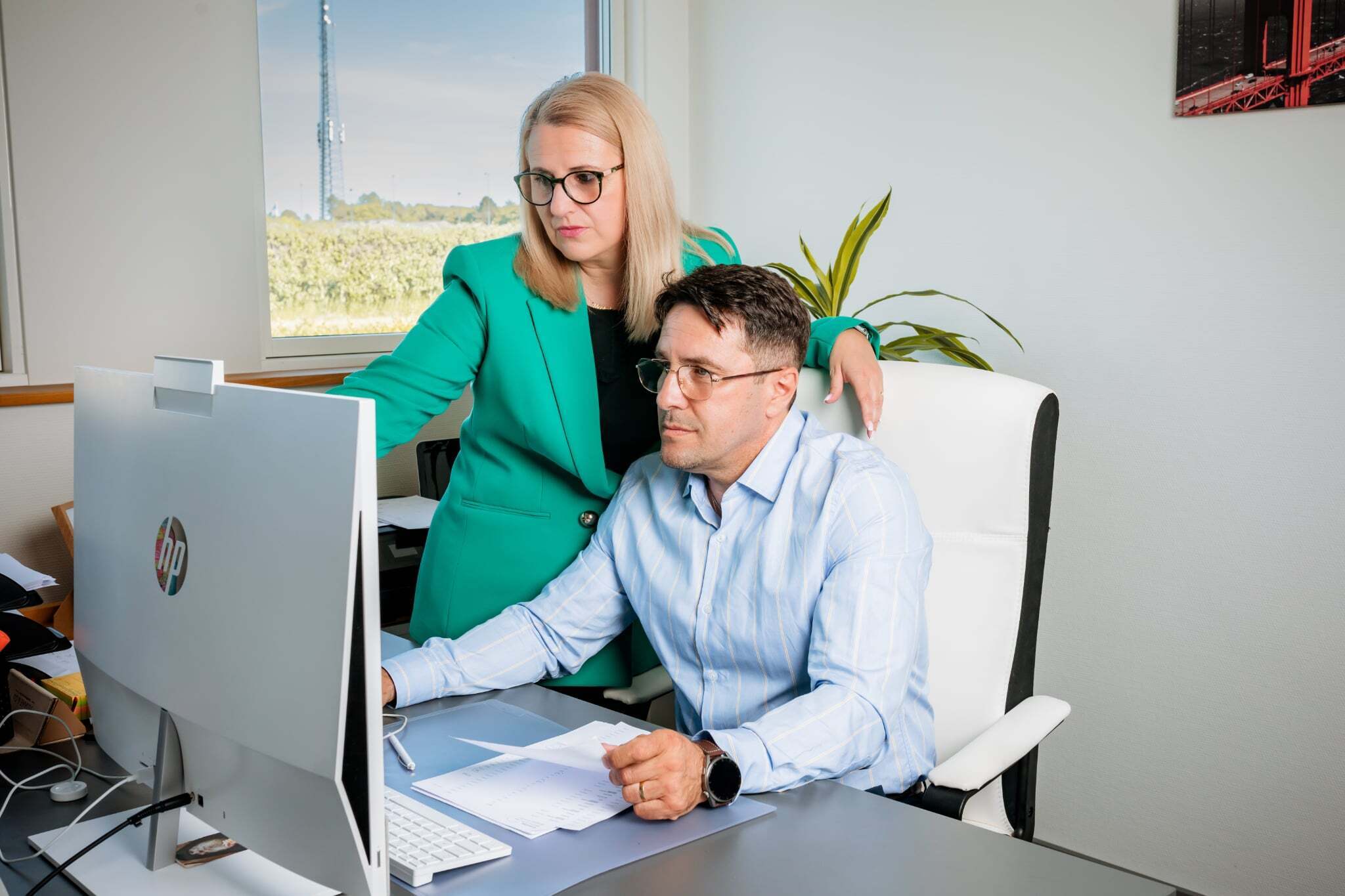
Contab Group focuses on offering tailored services to international residents, helping them navigate Denmark’s tax system. Anca explains: “The Danish tax system can be overwhelming for newcomers, and that’s where we step in. Our expertise allows us to offer personalized advice, helping international residents optimize tax deductions, manage VAT, and navigate income tax. We also support clients in accessing state aid and various financial support programs available to them in Denmark.”
Tax Deductions and Credits for International Residents
International residents in Denmark can benefit from several tax deductions and credits. Some of the most common deductions include:
- Transport Deduction: Commuting costs are deductible if you live more than 12 km from your workplace.
- Relocation Expenses: Costs related to moving to Denmark for work purposes may be partially deductible.
- Home Office Deduction: If you work from home and meet specific criteria, you can claim deductions for related expenses.
- Pension Contributions: Contributions to certain pension schemes are tax-deductible.
- Professional Training: Expenses for relevant training courses are deductible.
- Loan Interest: Interest on mortgages or specific loans may be deducted.
Some international residents might also benefit from the Expat Tax Scheme, which offers a flat-rate tax for a limited period, making the tax process more predictable during their initial years in Denmark.
Public Financial Support for International Residents
International residents may be eligible for various forms of public financial support in Denmark. These include:
- SU (State Educational Grant): For EU students meeting residency and work criteria.
- Unemployment Benefits (Dagpenge): Available to EU members of an unemployment insurance fund.
- Social Assistance (Kontanthjælp): For residents without another income source.
- Housing Support (Boligstøtte): For low-income tenants.
- Child Benefit (Børne- og ungeydelse): Quarterly payments for children under 18, dependent on employment status and the length of stay in Denmark.
Tax Filing Process for International Residents
When filing taxes in Denmark, international residents must provide several key documents:
- CPR Number: Required for tax registration.
- NemID/MitID: Electronic identification for accessing tax platforms.
- Payslips: Summarizing total income.
- Annual Tax Statement (Årsopgørelse): Issued by the Danish Tax Authority.
- Proof of Other Income: For freelance, rental, or investment income.
Documents for Deductions: Receipts for transport, relocation, pension contributions, and professional expenses.
Anca suggests: “The tax filing process in Denmark is straightforward, especially once you’ve gathered the right documents. We assist international residents in reviewing and correcting their pre-filled tax statement before submitting it, ensuring they don’t miss out on potential refunds or end up with any underpayment.”
New Tax Changes for 2025: What International Residents Should Know
Several new tax changes will impact international residents in 2025, as Anca explained.
- Increased Employment Deduction: The employment deduction will rise from 10.65% to 12.75%.
- New Income Tax Brackets: For higher-income earners, new tax rates will be introduced, ranging from 7.5% to 12.5%.
- Pension Contributions: The ceiling for pension deductions will be set at DKK 65,500.
Increased Cap for Share Savings Accounts: The limit will rise to DKK 160,000.
Tips for International Residents
Anca shares a few essential tips for international residents to manage their taxes effectively:
- Register Correctly: Ensure you obtain a CPR number and NemID/MitID as soon as you arrive in Denmark.
- Monitor Your Tax Card: Update your estimated income whenever there are significant changes.
- Declare Worldwide Income: Denmark taxes worldwide income, so be sure to report any foreign earnings.
- Keep Supporting Documents: Hold on to documents related to deductions for at least five years, in case of an audit.
Anca points out that navigating Denmark’s tax system doesn’t have to be overwhelming. With the right information and preparation, international residents can focus on building their life and business in Denmark while staying compliant with local regulations.
If you’re looking for expert guidance on navigating Denmark’s tax system or need support as an international entrepreneur, Anca Monica Mocanu and her team at Contab Group can help. With a deep understanding of the challenges newcomers face, they offer personalized support in accounting, compliance, and business development. Here’s her Facebook page and the website of her company, Contab Group.
Last Week in Denmark has not received any payment from individuals or services quoted in this article. These are given for information purposes only.