




English is inescapable in Denmark. We hear snatches of Danish conversation in the street punctuated with English phrases like “So good!” or “Totally wild!” or “Cringe!”. We see supermarket billboards instructing us to “Download vores app”. If we live in Copenhagen or even Aarhus, it’s becoming increasingly normal to be served in shops, restaurants and cafes by staff who don’t even speak Danish at all. Being surrounded by English has become so normal that we often don’t think to question it.
But the Konservative party thinks we need to question it. And ultimately they think it’s unacceptable. They believe the government needs to take action to protect the Danish language from being eroded by English. In April, the party launched a parliamentary proposal calling for changes in the law to do just this.
But is Danish really in danger of being replaced by English? Do we really need new laws and government departments to protect the language? Could the increasing presence of English in Denmark even be a positive thing? We take a closer look.
What are the Konservatives proposing?
The party want:
- A new law requiring Danish authorities and public institutions to prioritize Danish over English
- A clearer national language policy that takes a more critical approach to including new words in the dictionary
- A new language council that will devise Danishizations of new words and expressions from other languages that are beginning to be used in Danish
The Konservatives believe the changes are needed to protect the Danish language. In their parliamentary proposal, they argue English is “gaining ground in education, business and the media, which risks weakening Danish as the main language [in Denmark]”.
Speaking on Danish national radio, Mai Mercado, the Konservative legal spokesperson, said the new language law is essential to ensure we do not have a “passive approach to the Danish language” but “develop and invent new Danish words when we are influenced by abroad.”
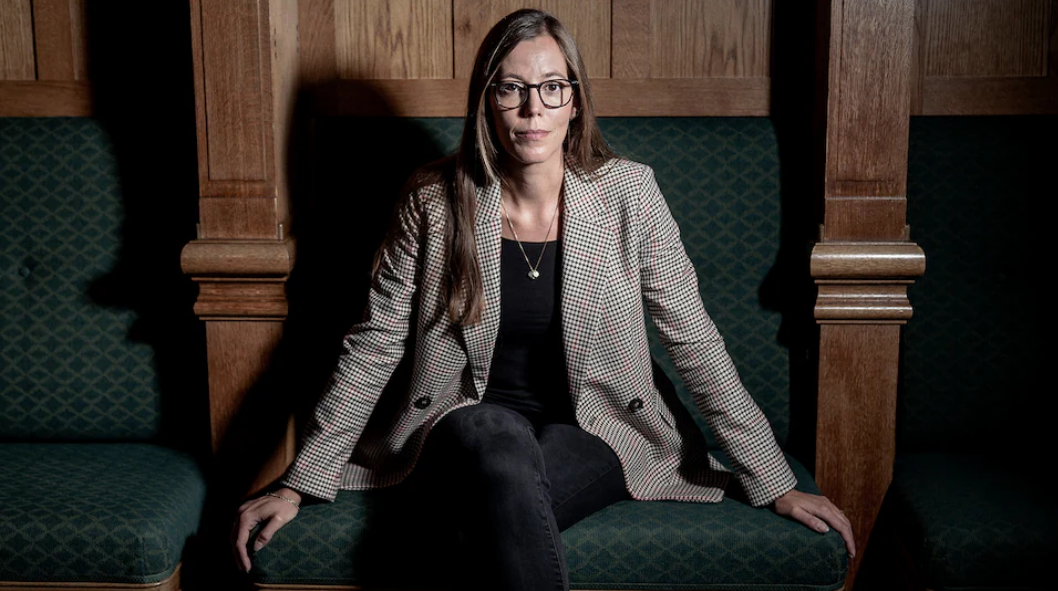
“Danish language is not just a means of communication,” Ms Mercado said. “It is a carrier of Danish culture, history and identity. – It is crucial for our cohesion and for our self-understanding as a country, and that is why we must protect and develop the Danish language.”
However, critics of the Konservatives’ proposal argue it is more about manifesting political issues. “It’s not really the language they are concerned about,” Søren Boy Skjold, a journalist, teacher and co-author of a new book on the Danish language, told Last Week in Denmark. “It’s more the influence of other nations and their belief that Danish culture needs protecting from that.”
A Brief History of English in Denmark
English has not always been the unofficial second language of Denmark. German held this position until the end of the 18th century, as the administrative and military language of Denmark. English only took hold as recently as the last century.
In 1903, in the era of the British Empire, the Folk School Act made English a school subject on a par with German in the Danish curriculum. Post-World War II, with the increased global influence of the UK and US, English increased in popularity in Denmark. In 1958, the teaching of English became mandatory and was gradually introduced at earlier and earlier stages. Now, English teaching begins in the Second Grade (age 6-7).
In 1976, the Ministry of Education guidelines discussed the prospect of Denmark becoming officially bilingual, though this was never realised and subsequent guidelines did not mention it.
Since the late 1990s, increased globalisation, particularly in trade, cross-border working and new digital technologies, have encouraged the spread of English. In 2006, the political party Radikale Venstre proposed that English should become the official second language in Denmark. Whilst this hasn’t happened, the authors of a recent study conducted by Aarhus University between 2021 and 2025 concluded, “It no longer makes sense to think of English only as a foreign language in Denmark. [It] has become an everyday language in Denmark – an unavoidable part of societal life, just like Danish.”
However, the Aarhus University study, published in the book English in Denmark: What’s the Story?, also found that English is not as dominant in Denmark as some think, and is certainly not edging out Danish. Public school education is still taught in Danish, the public service TV channels DR and TV2 are still required to deliver predominantly Danish content and report on this to the government, and in many employment sectors spoken and written Danish is essential. Print and online news is still almost entirely in Danish too.
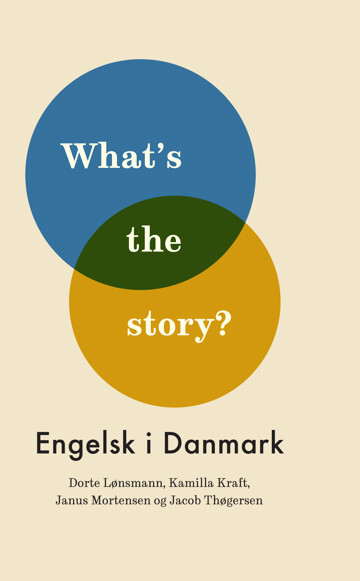
English use in Denmark: how the numbers stack up
Beginning in 2021, the team at Aarhus University studied nearly 900 Danish residents of all ages, comparing the results to a similar study in the 1990s.
The authors concluded, “It is not the case that English has overtaken Danish. It is both-and rather than either-or.”
English use in everyday life
- 90% of study’s participants say they could hold a conversation in Danish but only 50% described their English as “really good”.
- 18% of participants say they speak English every day and 16% write in English every day. In 1995 these figures were 9% and 4%.
- Only 60% say they hear English every day, compared to 80% in 1995.
- Amongst 46-55 year olds only 25% speak English daily and 20% write it daily. This drops to 6% and 4% respectively for the over 65s. Amongst 16 to 25 year olds 35% speak English daily and 29% write it daily. However, these percentages are still lower than many might believe.
- In the media, “Danglish” features far less than we think: only about 1% of words used in a range of TV and radio programs studied are “loan words” from English. In Danish newspaper articles, English loan words make up about 0.5% of the words, and in weekly magazines, 1%. There has been no increase since the early 2000s, despite the Konservatives’ claims.
- 3% of the adult Danish population (150,000) cannot speak any English at all. This group is made up of older age groups and also those with the lowest levels of education.
English in the Danish job market
The Aarhus study concludes that “written English skills are a necessity for the vast majority in the Danish labor market”.
However, this varies depending on the sector. Whilst English is essential in academic jobs, where 28% of undergraduate programmes and 50% of Masters programmes are taught in English, in public sector jobs and particularly the health and care sectors, little English is used. In these sectors, spoken and written Danish is a necessity. Danish law determines that the language of the law courts is Danish, meaning any job working with legal documents requires good knowledge of the language.
Type of job % of posts requiring English
Academia Almost all
IT sector 73%
Education/teaching 8%
Health and care 4%
Private sector 60%
Public sector 29%
English vs Danish: a generational divide?
The Aarhus researchers found that English use, and “Danglish”, where Danish and English are mixed together, was most common amongst the youngest participants in the study. They found young people increasingly speaking in a way where “the main language is Danish, but English words, expressions, and entire sentences are an integrated part of the language. And it is presented as a perfectly normal way of talking and writing together.” The researchers attribute this to social media use, particularly online gaming culture, where the game has its own language and terminology, in English, that is used by players.
The researchers also argue “Danglish” is being driven by Danish social media influencers who mainly use Danish in their communication but “spice it up with English expressions and phrases” to give their products a specific, international identity that young audiences will relate to. Thus the youngest generations still identify as speaking Danish but it takes a very different form from the language older generations recognise.
There is no doubt that the youngest generation are the most adept at English, which can bring many advantages. “My 23-year old son developed really good English from gaming online,” says author Søren Boy Skjold. “That’s good for him because he can now travel and study around the world and communicate with everyone.”
However, many older people are alienated by the increased use of English in everyday life in Denmark and a possible future where English banishes Danish entirely. One elderly man quoted in the study is angered at the mention of sales assistants only speaking English in Copenhagen shops. “I would walk out of the store,” he says. The researchers also mention the anxieties many elderly people have about being cared for by non-Danish speaking nursing home staff in the future. With the government’s recent pledge to incentivise care workers from South Asia to come to Denmark, it’s an understandable concern.
The team found that younger people do understand the worries of older generations. “You have to think about the older people,” says David, aged 12. “They might think, ‘Oh my God, we have fought for this motherland. Now the English language should not come into our space.’”
English in Denmark: what does the future hold?
The Aarhus research team argue that “Denmark today should be seen as a multilingual society, where both Danish and English play a role for most people”. Whilst not all Danish residents may use English actively in their daily lives, the “unspoken expectation is that one is capable of doing so if the situation requires it.”
Therefore, for them and other leading language experts, the Konservatives’ proposal is not only unworkable in practice but the wrong direction to take. Henrik Gottlieb, a researcher at theUniversity of Copenhagen, believes that the Konservatives’ bill will have no effect on everyday spoken Danish: “It is only if there is a great will in the population to change some things and drop certain Anglicisms that this can succeed. Otherwise you end up with a small elite of language standards people who set some guidelines that no one follows.”
Søren Boy Skjold, co-author of a new book on Danish, We Value the Danish Language/Vi sætter pris på det danske sprog, told Last Week in Denmark, “I’m not afraid of the English influence on the Danish language. People have always worried about the influence of other languages and cultures. My parents’ generation worried about the influence of American music culture on me and their parents probably worried about Jazz music influencing them. I’m more concerned about young people’s ability to speak and write proper Danish in the social media age where they communicate mainly in short form. We need to show young people how important it is to write and read Danish, give schools enough money to buy books and educate teachers to care about the Danish language too. That’s where we really need to place our efforts.”
The Aarhus researchers believe there is a role for an expanded Language Council like the Konservatives want. However, they argue this would be better focused on giving advice and information on the use of English in Denmark and the choice between Danish and English in the workplace, than on devising Danish versions of English words. They argue a national language policy addressing the relationship between Danish, English and other languages could also be very helpful.
At any rate, as the Aarhus researchers conclude, “English is not something that can simply be regulated or…shut down…..As long as society continues to evolve along the same path, English will continue to play a role.” This is neither inherently good or bad but we do need to reflect on its usage and ongoing relationship with Danish and other languages. We also need to think critically about how language can include and exclude people, including the elderly and the 150,000 Danish residents who say they cannot speak any English.
We also have to think about the youngest of the population, who feel most comfortable with English. “When you love something you have to discuss it and value it and be critical about it,” says Søren Boy Skjold. “If you educate young people in how great a language Danish is then they might say, ‘OK, I’ll take something from English’. If they don’t know about the richness of Danish, they might say, ‘I’ll just take everything from English instead,’ and that would be very sad.”
Who are the institutions currently responsible for taking care of the Danish language?
Dansk Sprognævn/The Danish Language Council (DSN)
Established in 1955, it oversees all aspects of the Danish language for the government including:
- Monitoring the development of the Danish language, for example, by collecting new words. This includes Danish Sign Language.
- Answering questions about the Danish language and its usage
- Publishing the official dictionary of standard Danish spelling (Retskrivningsordbogen)
10 “Danglish” words added to DSN’s “New Word List” in 2024
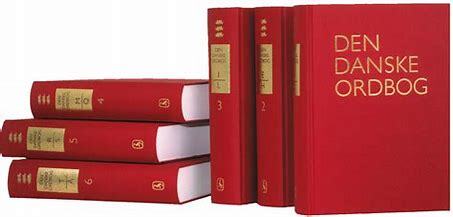
The “New Word List” contains all the words DSN observes being used as part of the Danish language. Words are collected by DSN through their own research and the public’s submissions to Sproget.dk (see below). The inclusion of a word in the list does not mean DSN approves of the word or that it will go on to be included in the official Danish Dictionary (Ordbog).
Airfryer
Bodyage
Doomscrolle
Explainer
Fling
Mankini
Mental load
Romantasy
Sandwichgeneration
Situationship
For definitions, see Nye ord i dansk 1955 til i dag er blevet opdateret med 45 nye opslagsord – Dansk Sprognævn
Det Danske Sprog og Litteraturselskab/The Danish Language and Literature Society
- A publishing company affiliated with the Ministry of Culture that publishes, amongst others, the official Danish Dictionary (Ordbog)
- Collaborates with the Language Council in a range of ways, including Sproget.dk, a website offering information and answers to questions about the Danish language. If you have seen a new word in a newspaper, noticed a new meaning of a word or overheard a new expression on the bus, you can send your observations to sproget.dk to help them monitor the development of the Danish language.
Norway’s language law
Mai Mercado, legal spokesperson for the Konservatives, has called Norway a “fantastic example” of how language laws can work effectively. The Konservatives believe Norway takes a far more critical approach to protecting its language, including requiring Norwegian versions of words from other languages to be developed. Similar language laws exist in France and Iceland.
The law enshrines Norwegian languages – Bokmål and Nynorsk – as the official written languages of the country. Norway’s Language Council has a high degree of control over official written language usage, advising public bodies, who must ensure fair representation of both Bokmål and Nynorsk in their written communication, and ensuring compliance with the law across the country. All school and undergraduate tuition is in Norwegian.
Several minority languages are defined as such in Norwegian law and municipalities with high numbers of speakers of these languages must issue all official communication in these languages too.
However, Norway’s approach has been criticised for being culturally divisive, unnecessarily costly to public funds and discriminatory to internationals or those with additional learning needs, for whom learning two written languages can be overwhelming.


V interesting article. I suspect the word English appears instead of Danish in the sentence “ Public school education is still taught in English” ?