




I’ll be the first to admit:
Danish has a reputation for being a tricky language to learn. Its unpredictable pronunciation, complex vowel system, and the challenge of understanding fast-spoken Danish can make it feel intimidating and almost impossible to grasp at first.
From my many years of teaching Danish, I’ve seen that most newcomers are offered free language classes through their local kommune. While it’s a great opportunity for many, it’s not the right fit for everyone. Some have demanding jobs, changing work schedules, or family obligations that make it difficult to attend regularly. Others, unsure at first whether they’ll stay in Denmark and relying mainly on English, only realize later that they do want to learn Danish, often discovering too late that the free offer expires five years after arrival.
I’ve also heard from several newcomers that they sometimes feel the state courses focus more on pushing students through the system and preparing them to pass the final exam, rather than on truly helping them learn and feel confident using the language in everyday life.
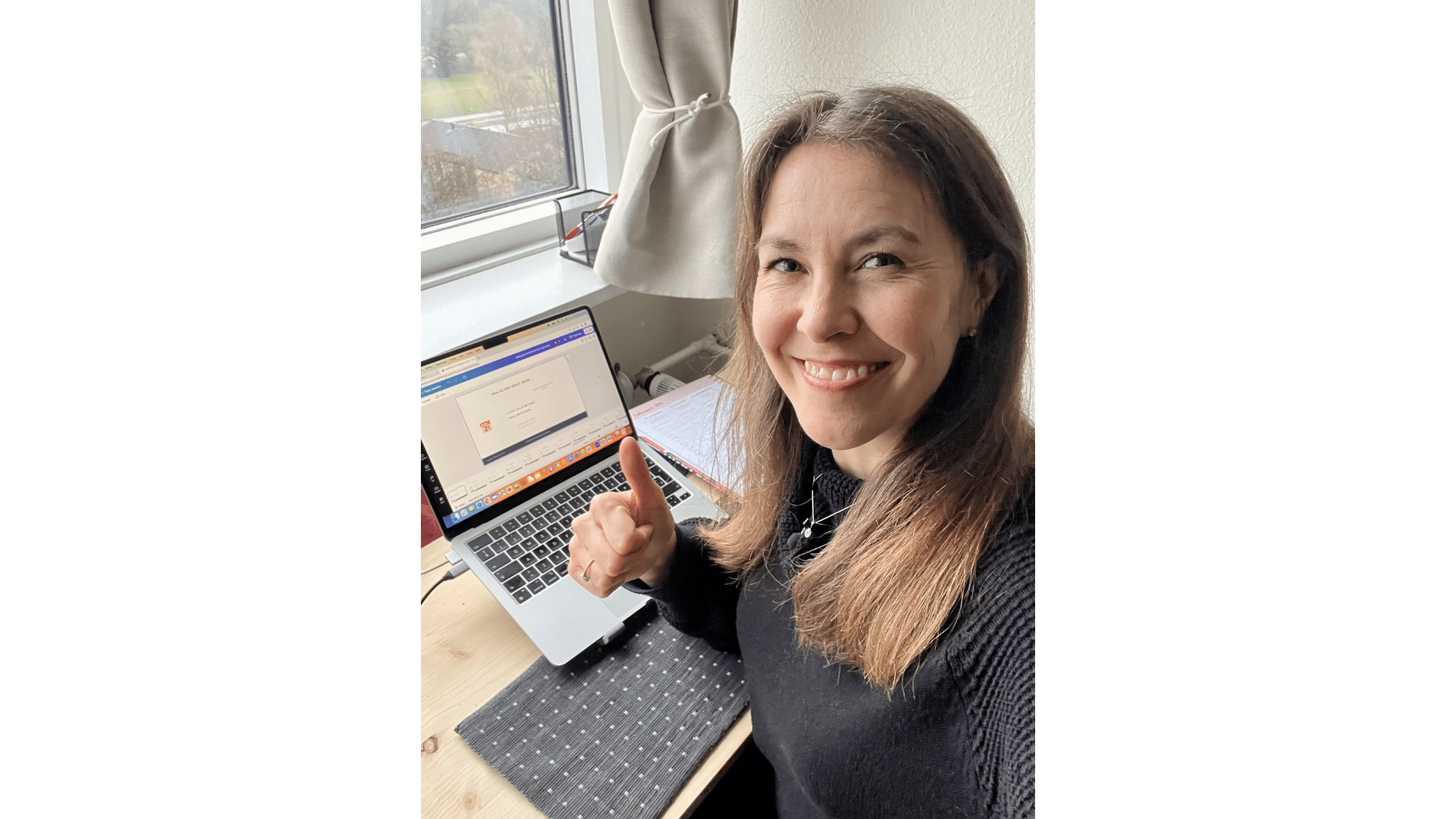
That’s where my platform, Lingua Danica, comes in. I’ve built it to offer a flexible, motivating, and culturally grounded alternative to standardized language programs – one that helps learners truly connect with both the language and everyday life in Denmark.
LEARNING ONLINE: WHAT’S THE TRICK
Flexibility and convenience are the key words, especially for those who are no longer in school and need to fit their language learning around work and family life. I used to teach in a traditional classroom before moving fully online. Knowing both sides of the coin helped me shape my own teaching method, which later became Lingua Danica: clear explanations, logical sequencing, and a strong emphasis on learner autonomy, with just the right amount of support when needed.
I never promise linguistic miracles or shortcuts; learning a new language takes both dedication, lots of work, and patience, but I do believe in giving learners the freedom to progress at their own pace. With Lingua Danica, you don’t have to worry about missing a class, arriving late because of work, or putting your studies on hold “until next year” because a new baby arrived. My approach is designed to support a healthy balance between learning, family, work, and free time.
THE LEARNING STRUCTURE
Lingua Danica offers a complete learning path from beginner to advanced. Each level is designed around the Common European Framework of Reference for Languages (CEFR), so students can easily identify their starting point and track their progress.
Each course includes:
- Video and audio lessons
- A great variety of exercises to solidify what you’re learning
- Cultural insights woven into the grammar and vocabulary
- Access to online community spaces for practice and discussion
The early modules focus on everyday communication and basic grammar, while the advanced ones dive into complex structures, idioms, and real Danish culture – the way people actually speak.
LINGUA DANICA VS. STATE DANISH COURSES
In Denmark, most public language schools (sprogskoler) offer three formal programs: Danskuddannelse 1, 2, and 3. These are classroom-based, follow a fixed schedule, and require regular attendance – which can be difficult if life gets busy. Missing just a few classes can make it hard to keep up.
With Lingua Danica, I’ve created an alternative:
- Format: 100% online – accessible anywhere, anytime
- Pacing: Self-paced learning – no deadlines, no pressure
- Access: Lifetime access to all purchased courses
- Interaction: Personalized written answers and feedback directly from me – because even online, I want my students to feel supported and seen.
State language courses can be a great fit for many, especially for those who can attend regularly and benefit from a structured classroom setting. There are many skilled and passionate Danish teachers in the public system who create meaningful learning experiences. But I’ve also met newcomers who found the rigid class schedule, large classes, mixed levels, or exam-focused approach challenging, and who wished for more flexibility and personal guidance.
That’s where Lingua Danica offers something different. My courses are built for those who want flexibility, cultural insight, and a realistic learning pace – without losing the personal connection to a teacher. Over the past several years, I’ve helped nearly 2,000 students learn Danish in a way that fits modern life: more individualized, more digital, and more adaptable to real-world schedules. Because learning Danish shouldn’t just be about passing a test – it should be about gaining confidence, connection, and truly feeling at home in Denmark.
If you’d like to learn more about Lingua Danica and see if it could be right for you, join my upcoming webinar in collaboration with Last Week in Denmark:


Hey my name is Josue I want to learning danish very fast