
Ali Lewis talks to some of the experts and innovators determined to transform the country’s relationship with social media.

Recently I had to spend two hours at an airport without my phone. I actually had not just one but two phones with me. But while all my data transferred from my old one to the new one I’d just upgraded to, they were both useless. What would I do to pass the time? It was a weird, unsettling feeling.
I stared out of the window into the social media-free abyss for a bit, then I remembered I had a book. I’d carried it around for three days but never opened it. In those two hours I read most of that book. I can’t remember the last time I read for so long uninterrupted. But I also couldn’t stop myself looking at my two phones, updating at snail’s pace, checking how long it would be before I could use at least one of them. Two hours. One hour. 45 minutes. 20 minutes.
But when I could eventually connect with the online world again, I hadn’t missed anything vital at all. So why was I so bothered by being offline? What was more, I felt calmer than if I’d spent the two hours scrolling. I felt more still, somehow. I could actually think, free of distractions. It made me wonder if I did actually have a problem.
The Bergen Social Media Addiction Scale, developed by the University of Bergen, is one of the most popular tools for assessing individuals’ level of addiction. The authors of the scale define social media as
“Being overly concerned about social media sites…driven by a strong motivation to log on to or use social media sites, and devoting so much time and effort to social media sites that it impairs other social activities, studies/job, interpersonal relationships, and/or psychological health and well-being”
Was this me? I had to answer a series of questions: how often do I think about social media? How do I cope if I can’t use it? Does social media use affect my work or study? Have I tried to cut down on my usage before without success? Do I use social media as a coping tool when I feel low? I had to rate my responses on a 5-point scale from Very Often to Rarely, then the diagnosis came back.
Partially excessive consumption of social media
“You probably spend a lot of time on social media,” read the explanation. “Even though you sometimes have control, it’s not uncommon for you to lose control and spend far too much time on it. You may be at risk of becoming addicted to social media.”
Are you addicted to social media? Take the test here.
86,000 Danes are addicted to social media
I’m not alone. We love social media in Denmark: 90% of us use it, the highest proportion
of any EU country. According to Statistics Denmark, all 16-19 year olds here are on social media and 80% use TikTok, widely considered the most addictive platform. It’s not just teenagers either: 98% of 20-34 year olds in Denmark are on social media.
But the risk of addiction is real. 61% of Danes say they spend more time on social media than they want to, according to a new study by the new Ministry of Digital Affairs. 86,000 of Danes aged between 15 and 64 are addicted to social media, according to a study last year by the University of Southern Denmark. And a recent study by the government’s Wellbeing Commission found addiction is particularly prevalent in girls: 31% of 13-17 year old girls show moderate or severe signs of social media addiction.

I talk with Dr Imran Rashid, an award-winning expert on digitalisation and mental health and advisor to the Danish government. He tells me that amongst adults the problem of “digital stimulants” is actually much more widespread than many think “because it’s often hidden in work-related activities”.
He uses the term digital stimulants, he clarifies, because we can tend to underplay the health risks of social media addiction. In reality it can be just as harmful as addiction to substances. Other experts agree. “When you are addicted to social media, you have a three times greater risk of developing depression and a 4.5 times greater risk of becoming lonely, and not just a feeling of loneliness, but that you actually lose social relationships,” says Ziggi Ivan Santini, an epidemiologist at the Capital Region of Denmark’s Psychiatry who led the University of Southern Denmark’s study.
Tackling social media harm
The Danish public health agency, Sundhedsstyrelsen, has issued a series of recommendations over the past two years aimed at tackling concerns over young people’s screen use in particular. This school year, a growing number of Danish primary schools (educating children up to the age of 16) have taken Ministry of Education advice to go phone-free, requiring students to hand over their devices for safekeeping during the school day so they can learn and socialise with peers without the distraction of social media.
While phone bans might remove the problem during the school day for younger teens, what happens when they go home in the evening? And what about older teens and adults who need to regulate their own use? Sundhedsstyrelsen has also issued advice for adults on healthy screen use:
- Screens should not be used directly before bedtime
- Phones and tablets should be kept out of the bedroom
- Time away from screens involving physical activity should be planned
- We should all be more aware of our social media consumption and how that affects our wellbeing
- Parents and carers should minimise screen use when with children
- Parents and carers should take an interest in what children are doing online and establish agreements as a family for healthy screen use.
However, there is a growing belief across Europe that more needs to be done at government level to regulate the big social media platforms. Imran Rashid thinks this is being driven by the increasingly unstable global political situation. “Technology isn’t synonymous with progression any more,” he tells me. “The tech giants have an ideological interest in destabilising Europe, and the power they wield starts with the device sitting in the pockets of our children.”
Caroline Stage, Denmark’s new Minister for Digitalisation, agrees: “For many years, we have been too naïve about the consequences of social media. Now is the time to take it as seriously as other types of addiction,” she says. “This requires tough regulation of the tech giants – including age verification – so that we protect children and young people from content and platforms they are not at all old enough for.”
Dr Rashid believes Denmark’s upcoming EU presidency, which runs from July till December this year, means the country can “create the foundation for EU technology regulation in the future”. The EU has already begun looking into how the big social media companies can be compelled to change their highly addictive algorithms. Last year, the European Commission launched an investigation into Facebook and Instagram’s impact on children’s health, amid concerns about the platforms being addictive and too easy for children to sign up to. While officially young people have to be 13 to access social media, in reality many are signing up much younger. Ultimately, Dr Rashid says, Danish politicians are now “equipped with the right arguments” around social media, centring on child protection, age verification, democracy and data sovereignty to be able to influence EU policy. And he believes there is growing consensus across the European powers that change needs to happen at a pace.
An Ecological Internet?
Getting off social media altogether, or at least drastically cutting it down, is one solution to the health risks. Many of us probably secretly wish someone would come and take our phones away during the day like schools do. However, for adults, saying goodbye to social media altogether can seem impossible. Linkedin is an indispensable part of working life for many of us, while around 1.7 million Danes use Facebook’s communities, with over 15,000 people across the country involved in managing these communities. If you’re a parent, social media is essential for organising your children’s free time activities.
But what if we could get back to the original utopian ideals of social media, as a tool for bringing people closer together and keeping us better informed about our society? Danish film director Søren Peter Langkjær Bojsen is convinced this is possible. He’s spent several years trawling largely undiscovered online areas in search of “the good internet”.
In 2020, Bojsen deleted all his social media accounts following a nightmare he had about being “eaten” by social media. “It was clear to me that it couldn’t go on,” he told DR. He had been spending more and more time online in the lead up to his nightmare, eventually spending almost 24 hours a day plugged into social media.
Bojsen realised he didn’t hate social media itself but the way he was using it. “In the early days of the internet…people would talk about all the creativity and community it would be able to accommodate, but over the years I felt more like it was a place where I was nudged to scroll without thinking. That’s what I wanted to get away from,” he says.
His documentary series Den Anden Verden (Another World) was the result of several years of research. The first two episodes, released on YouTube last month, cover his exploration of obscure online communities and the connections he made there, including an old, anarchist Minecraft server and the world of Furries, where people dress up as animals.
“I have actually been reassured on my journey,” Bojsen told DR. “I have seen that there really are some strong online communities out there and exciting universes. You just have to scratch the surface a little bit – and you get in.”
Are Danish social media platforms the future?
Danish entrepreneurs are already developing the kinds of ethical, community-based online platforms Bojsen believes are possible. Before Meta took over, there were lots of these home-grown sites: Arto, Jubii Chat, DKBN, Skum. Arto, Denmark’s first social media platform, was resurrected last year after shutting down in 2016, and several other new platforms have emerged since.
Meningspunktet (The Opinion Point) launched last week to a trial group of 5000 users and will open up to the general public in August. Billed as the ethical alternative to Facebook, it promises itself as “local, safe and trustworthy”. The brainchild of brothers Tue and Jakob Oxenvad, Meningspunktet requires Mit ID login, holds all users’ data in Denmark and pledges not to sell it on to third parties. At present it can only be used by over-18s but the plan is for 15-17 year olds to be able to use it in time.
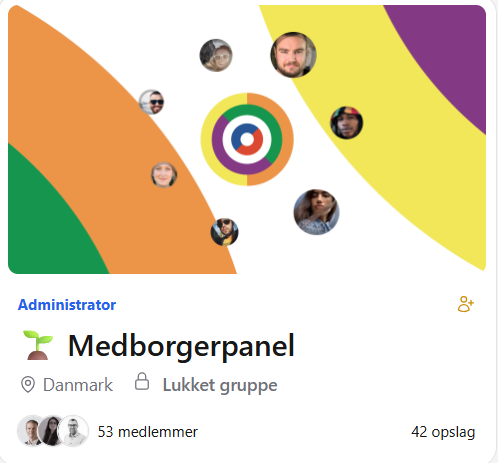
The Oxenvad brothers believe Meningspunktet places people, the community and democracy at its heart. Users are presented with content based on their local area but can always decide what they want to see rather than being controlled by an algorithm. Users will be able to create groups, join communities and follow different channels matching their personal interests. The Citizen Panel is a key aspect of the platform’s development.
“We launched Meningspunktet to our waiting list in mid-June,” Tue Oxenvad told me. “We have received a lot of positive feedback and contributions from our Citizen Panel. We plan to open it up to all of Denmark in August and are looking forward to launching a digital platform without fake profiles, built to create credible conversations and communities.”
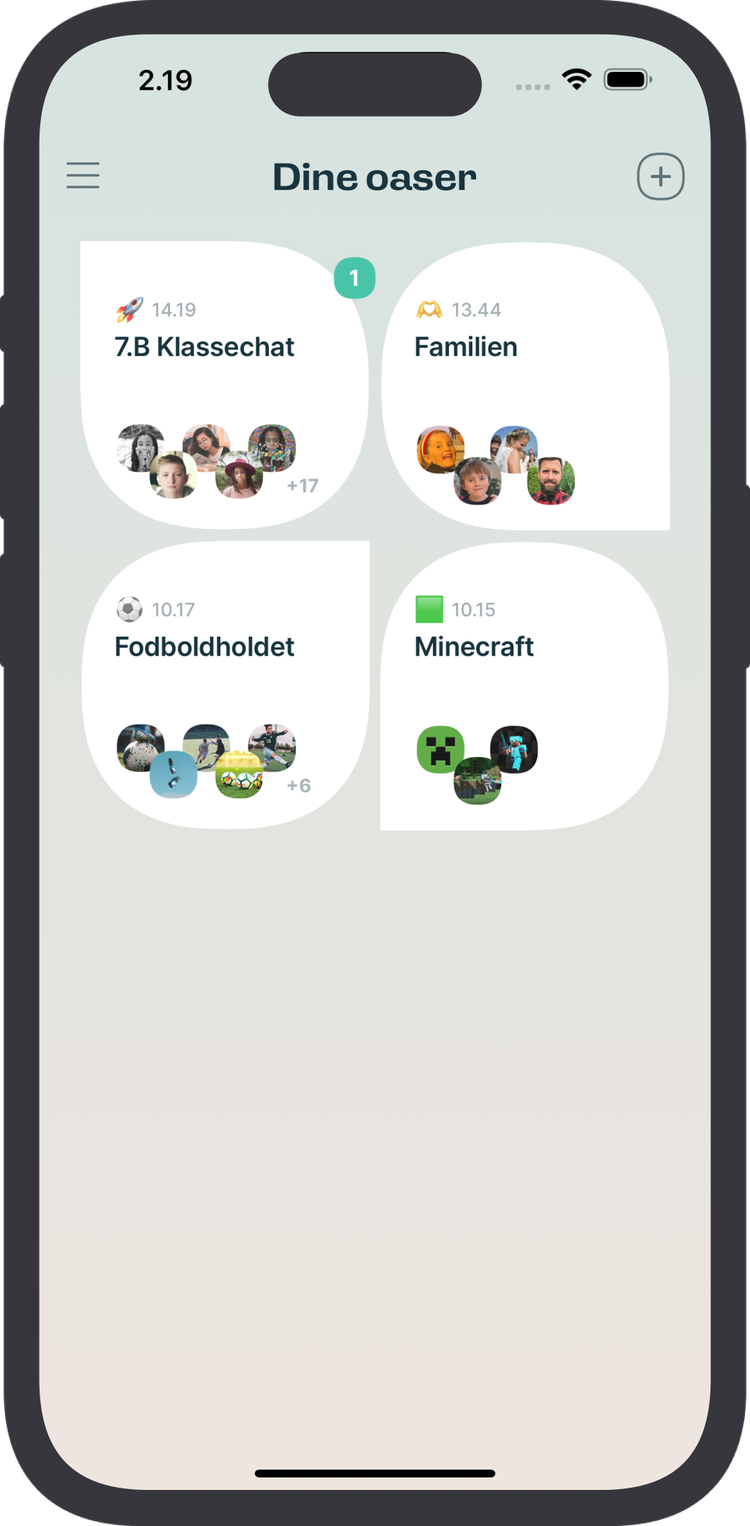
“I started Oase out of a very personal need,” creator Anders Lemke-Holstein tells me. “I felt frustrated by how our digital lives were increasingly shaped by commercial interests rather than human needs and was driven to build something different. Something calmer. A space where attention isn’t just another commodity”.
He describes Oase as a “digital community platform – a shared space where real-world groups can gather, talk, organise and stay connected on their own terms”. The app, which has just surpassed 11,000 users, has no algorithms, feed or tracking, doesn’t sell its data and is designed to “optimize peace of mind rather than screen time,” Lemke-Holstein tells me.
But what makes his app distinct from other home-grown social media platforms? “If you think of community as a house, Meningspunktet opens the front door to the world. Oase holds the rooms where people live, talk and share everyday life in calm and familiar surroundings,” he explains.
Lemke-Holstein is now working with efterskoler and højskoler (Danish boarding schools and folk high schools) and preparing for a broader roll-out across the Nordics. The plan is to offer Oase as a paid service to schools and larger organizations looking for a more ethical alternative to WhatsApp or Facebook. In the long term, he says, “There’s both a societal and political case for supporting platforms like Oase that align with democratic values and children’s rights.”
Ultimately, Lemke-Holstein is not interested in competing commercially with the Meta platforms. “Oase is not an alternative social media,” he stresses. “It’s an alternative to the need for social media.”
SOCii

SOCii, created by web developer Kim Domino Evers, went live in February this year. After being mentioned in a Boycott USA social media thread, it quickly gained 3000 new users.
“We don’t actually want SOCii to be a ‘boycott the USA,’ thing!” Evers tells me. “We’re not about politics. We are about just being and talking together, rather than expressing opinions. We want SOCii to be a Danish, local platform for the people in smaller communities, with local news and promoting local community services. It is a long-term ethical solution to the current big social media platforms.”
Evers first came up with the idea for SOCii back in 2019. “I created a really basic social media platform for breeders of racing dogs in Denmark,” Evers tells me. “A lot of them weren’t on Facebook so my platform was an alternative for the community. And it’s grown from there.”
Evers’ unique selling point is the partnership he’s just entered into with Conventus, the company used by many Danish associations for administration. It’s a “big plus”, he says. This autumn, SOCii and Conventus will be merged, giving SOCii access to Coventus’s 15000 associations and around a million users.
“We can give Conventus support and an easier daily administration system,” Evers says. “We are more local where Facebook, which local associations currently use to promote their activities, is thinking globally. If a small football club wants to hold an ‘open house’ at the weekend to attract new members, they can post the event on their Conventus admin system but it will also appear directly on SOCii so all users in the local area also get that post.”
Evers is adamant that SOCii will have no paid content or advertising and it will be run on the same principles as Danish associations (forening). “It will be a community with a board who will make future decisions about developments,” Evers tells me. “I want to hand SOCii over to the community, the users, over the next few years and that is what will keep it ethical and sustainable. And we do not sell our data to anyone.”
The app runs on a “karma” system where users earn points by contributing to the site, for example by writing comments and reviews. Users can then put their points towards promoting local services of their choice.
Evers expects SOCii to be fully operational next year. He is very optimistic about what the app offers to associations and also to local businesses. “If we can get even five percent of Conventus’s users to connect to SOCii, we suddenly have a critical mass worth talking about,” he says.
Supporting and empowering users instead of exploiting and distracting
“I don’t know if these ‘New Nordic Tech’ platforms are the future,” says Imran Rashid. “But they are certainly a future. They share a focus on supporting and empowering people instead of exploiting and distracting them, using social media as a tool rather than digital stimulation. They consider users’ needs and wellbeing in their planning.”
However, it remains to be seen whether home-grown apps can sustain themselves financially. “Nobody wakes up in the morning planning to spend 4,5,6 hours a day on social media. It’s not a plan but a loss of control, and that’s what the business model has been driven by for the past few decades,” Imran Rashid says. “The New Nordic Tech companies are not going to do the same. They have the right intentions and that’s why we have to make them into a success. They will need that help and support.”
Malene Charlotte Larsen, PhD. and associate professor of social media at Aalborg University, believes it will be a “tough challenge” for any of the new Danish apps to compete with Meta. But, she acknowledges, “Perhaps the time is right for there to be a market for something a little simpler with a community focus.”
New Nordic Tech: working together to build a better future
The Nordic Media Lab, founded earlier this year, brings together entrepreneurs from across the Nordics. They pledge to work together to build sustainable social media rooted in the Nordic values of information, trust and cohesion. Meningspunktet and Oase are already members.
“We’re each addressing digital sovereignty from a different angle,” says Oase founder Anders Lemke-Holstein. “Together, we’re trying to build a new digital ecosystem: ethical, open, human-centered. Denmark and the Nordic region have a unique opportunity to lead the way here, and collaboration is key.”
The new Danish social media apps have a model for success in Norway, where the Hudd app was launched at the end of November last year. The platform and its vision are similar to Meningspunktet, Oase and SOCii: serving the local community, control over content and data, no algorithms management, and access facilitated by Norwegian digital ID. Following Trump’s inauguration, Hudd expanded from 20000 to 120000 users and its creators believe they can grow to 250000 by the end of this year. The app also has the backing of the Norwegian government: its Minister of Digitalisation became user number 100,000 this year.